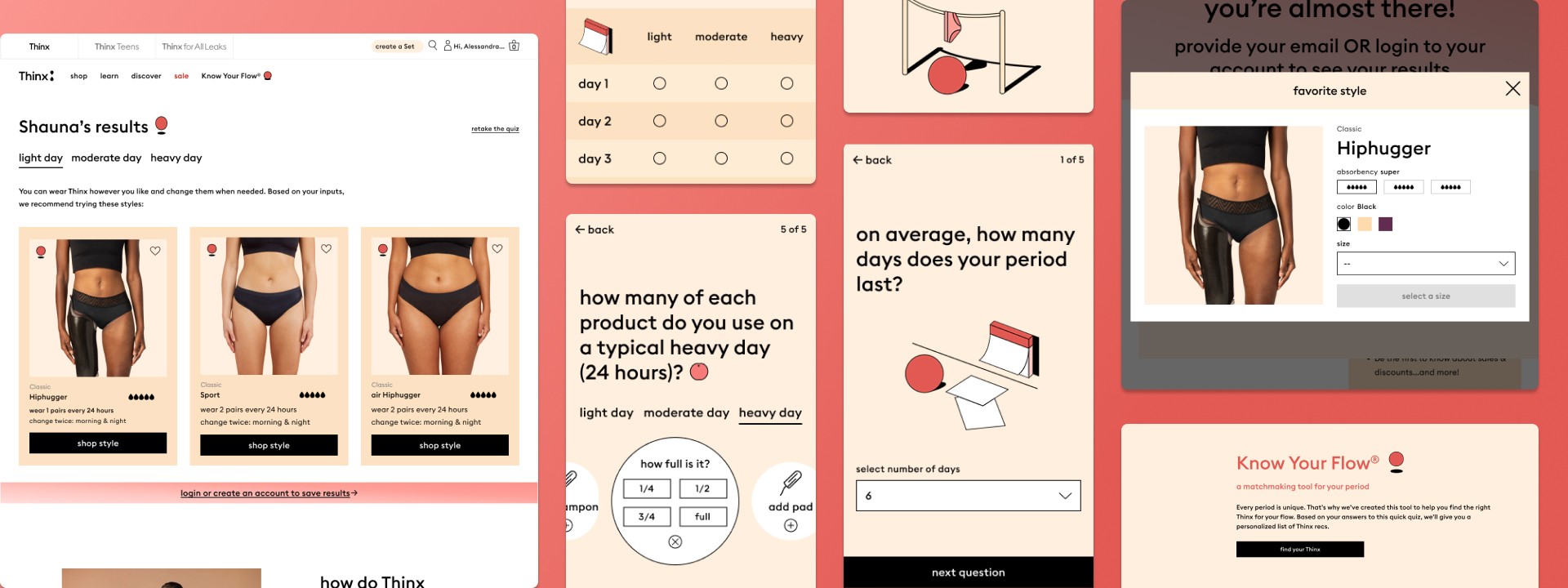
Leading the design of a personalized recommendation experience that became Thinx’s highest-converting acquisition channel.
UX Research
User Testing
User Education
User Flow
Product Domain
Web Based Survey
Role
UX/UI Designer
Company
Thinx Inc.
Industry
Health & Wellness, Consumer Products
Impact
Achieved 8.44% overall conversion rate
Drove 7.67% conversion from new users
Became Thinx’s top acquisition tool
Improved user confidence by translating personal behavior into product recommendations
Generated first-party data that informed product strategy and personalization
Overview
One of the biggest barriers to new Thinx customers wasn’t awareness, it was uncertainty. Users didn’t know if period underwear would actually work for their body and their routine. The product page explained what Thinx could do, but not what it would do for them.
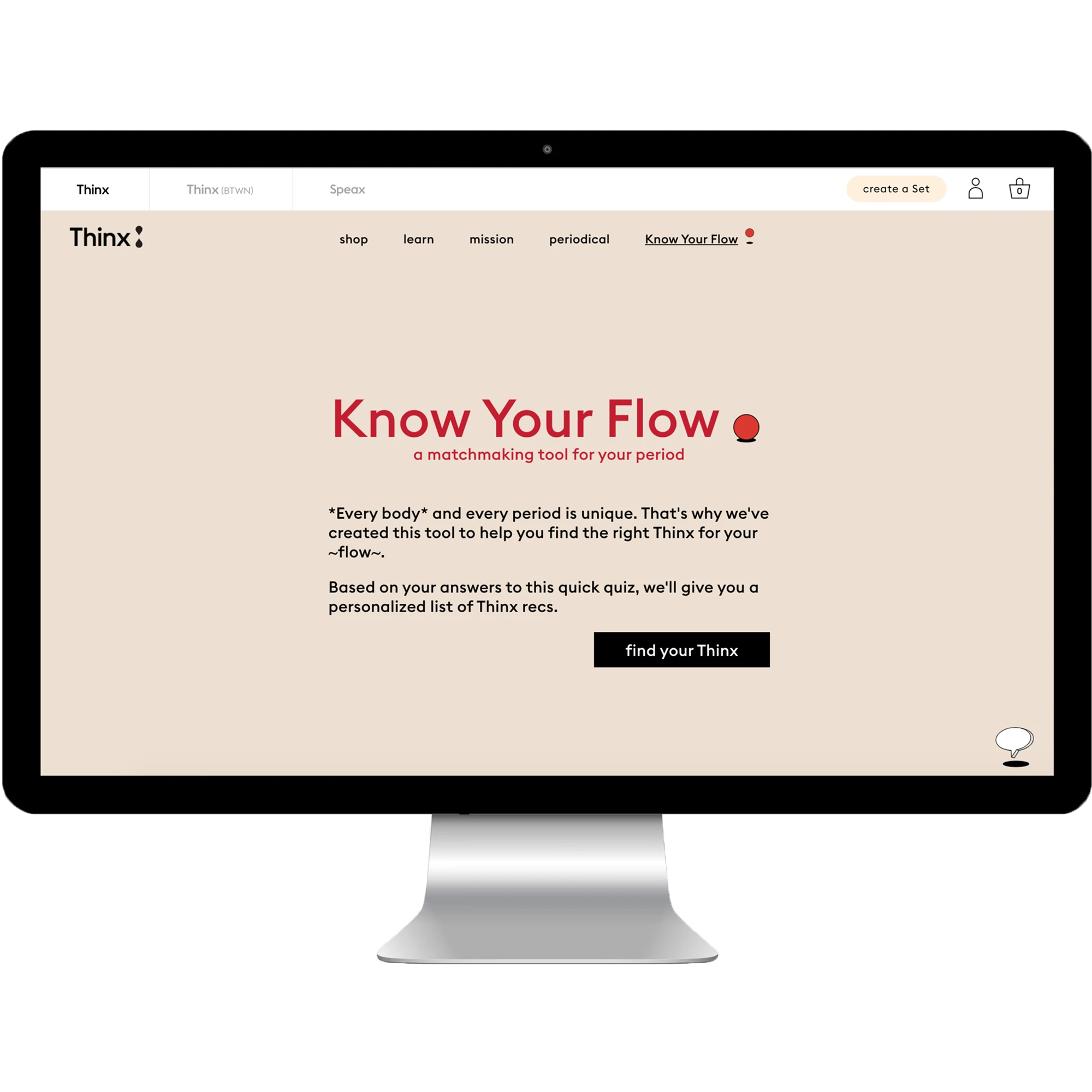
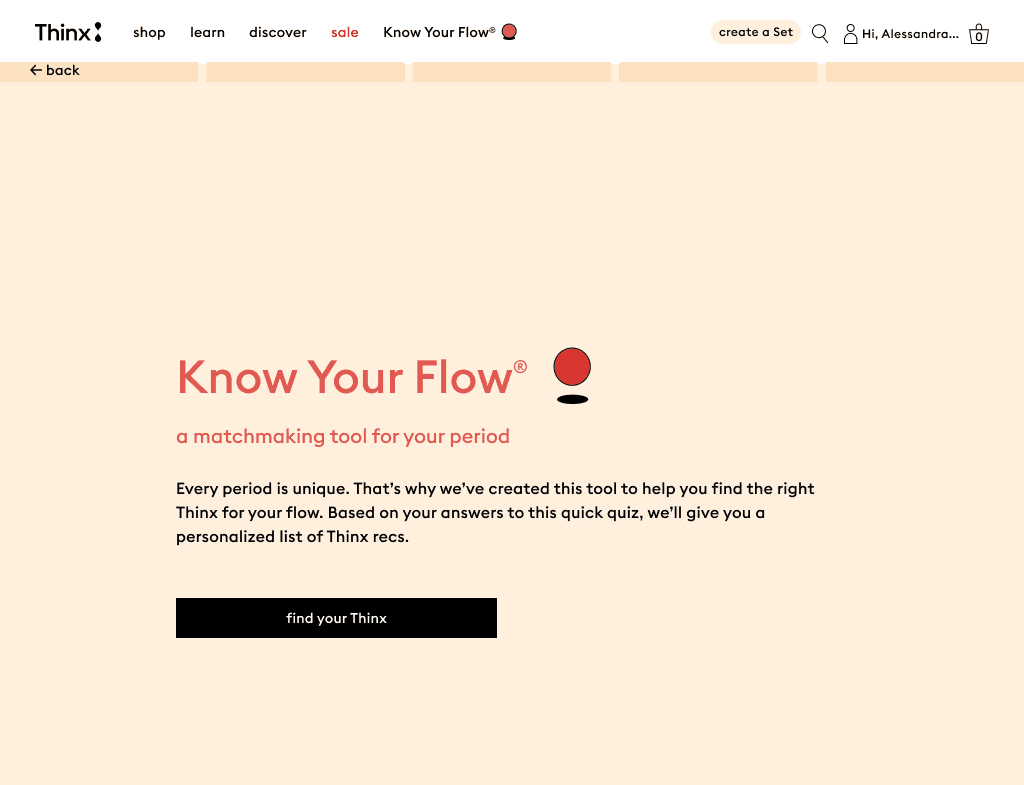
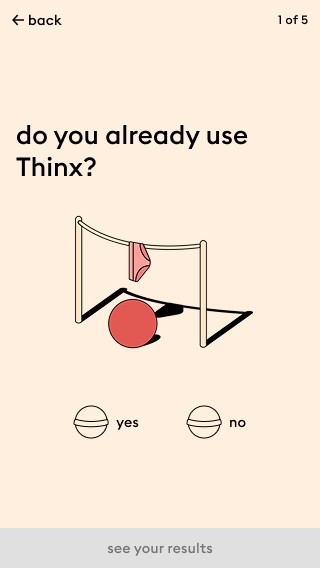
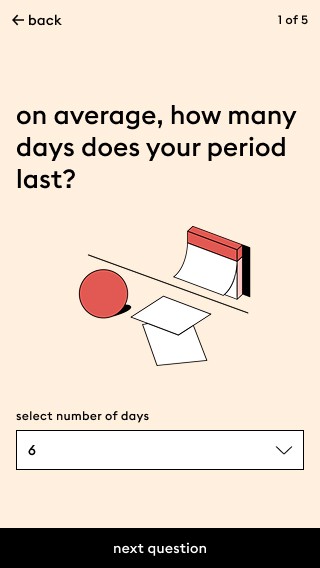
Know Your Flow was designed to solve that gap. An 8-question quiz that learns how a user experiences their period, then generates personalized product recommendations based on their flow, habits, and current routine.
Instead of asking users to understand Thinx, the tool was designed to understand them.
My Role
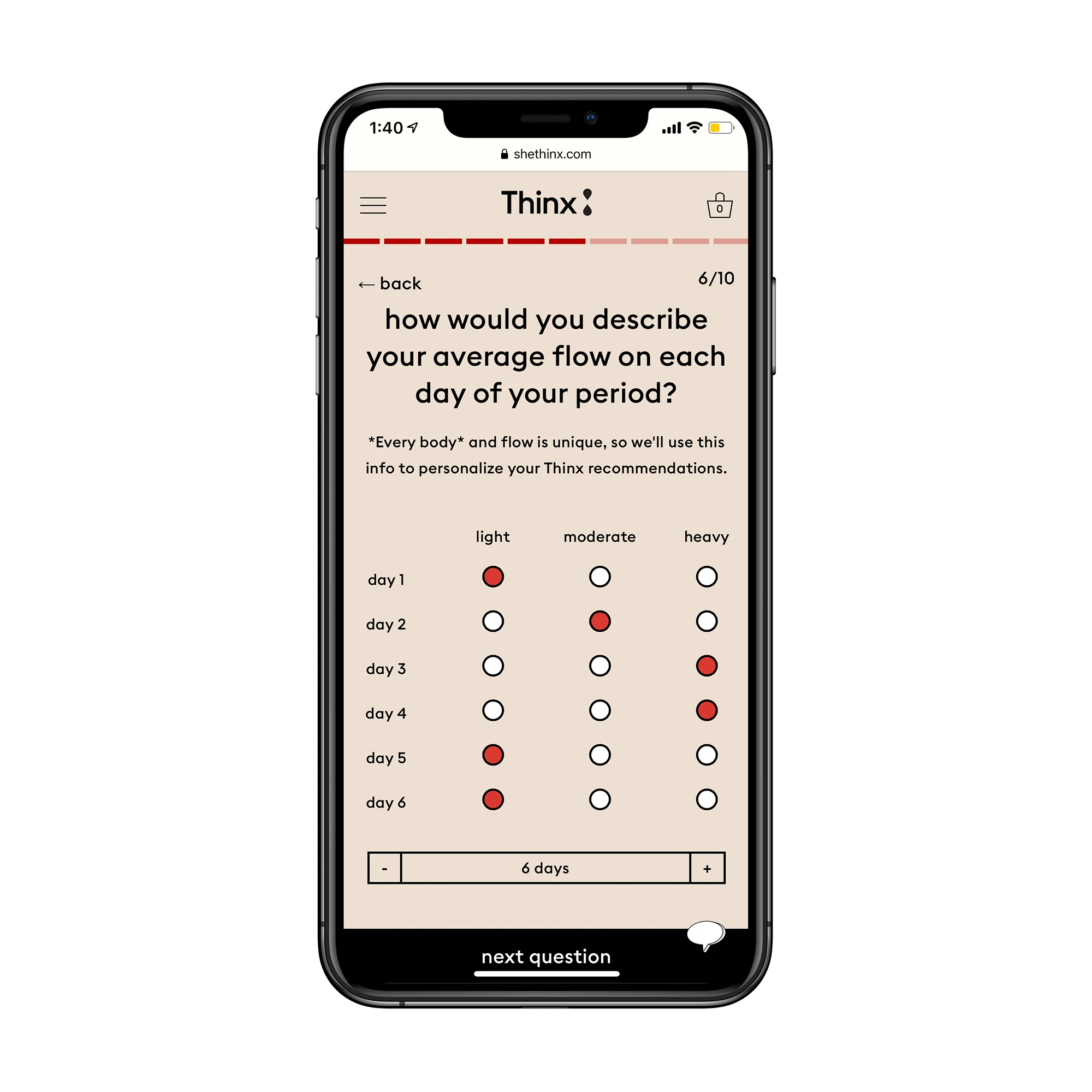
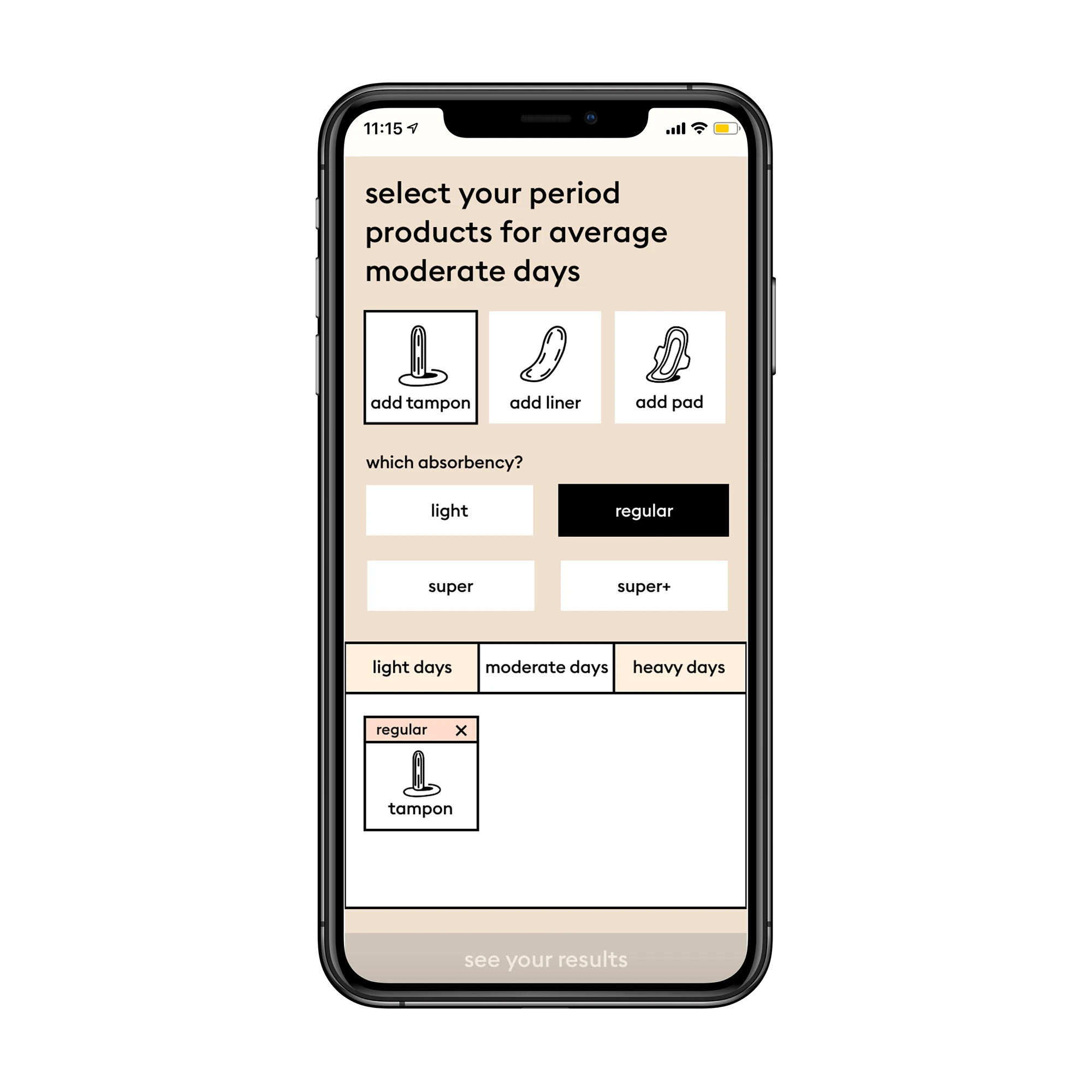
I was the UX designer responsible for the end-to-end quiz experience, including interaction design, question flow, logic states, and results page design across all breakpoints. I translated research and strategy into an interactive system that balanced personalization, clarity, and conversion. The full interaction system, including all question states, logic flows, breakpoint variants, and results page configurations, was built and documented in Figma, with prototypes used directly in usability testing sessions.
I worked within a cross-functional team that included UX research director Alyssa Nasca, UX researcher Elise Mortensen, and visual design lead Kim Suchy, who shaped the visual system and motion design for the quiz experience.
The Problem
Thinx products work differently for everyone, but the site relied on static content to explain a highly personal experience. A person with a heavy flow needs different products than someone with a light one. Someone who currently uses tampons has different replacement logic than someone who uses pads. And the concept of "absorbency" meant something completely different depending on the user's frame of reference.
The existing product pages tried to address this with static content, absorbency charts, and FAQ sections. It wasn't working. Users couldn't map generic product information onto their personal experience, and without that confidence, they didn't buy.
The insight that drove the tool's design was simple: instead of asking users to understand Thinx, ask Thinx to understand the user.
Key Challenges
Building a quiz sounds straightforward. It isn't, for a few reasons that made this project genuinely difficult.
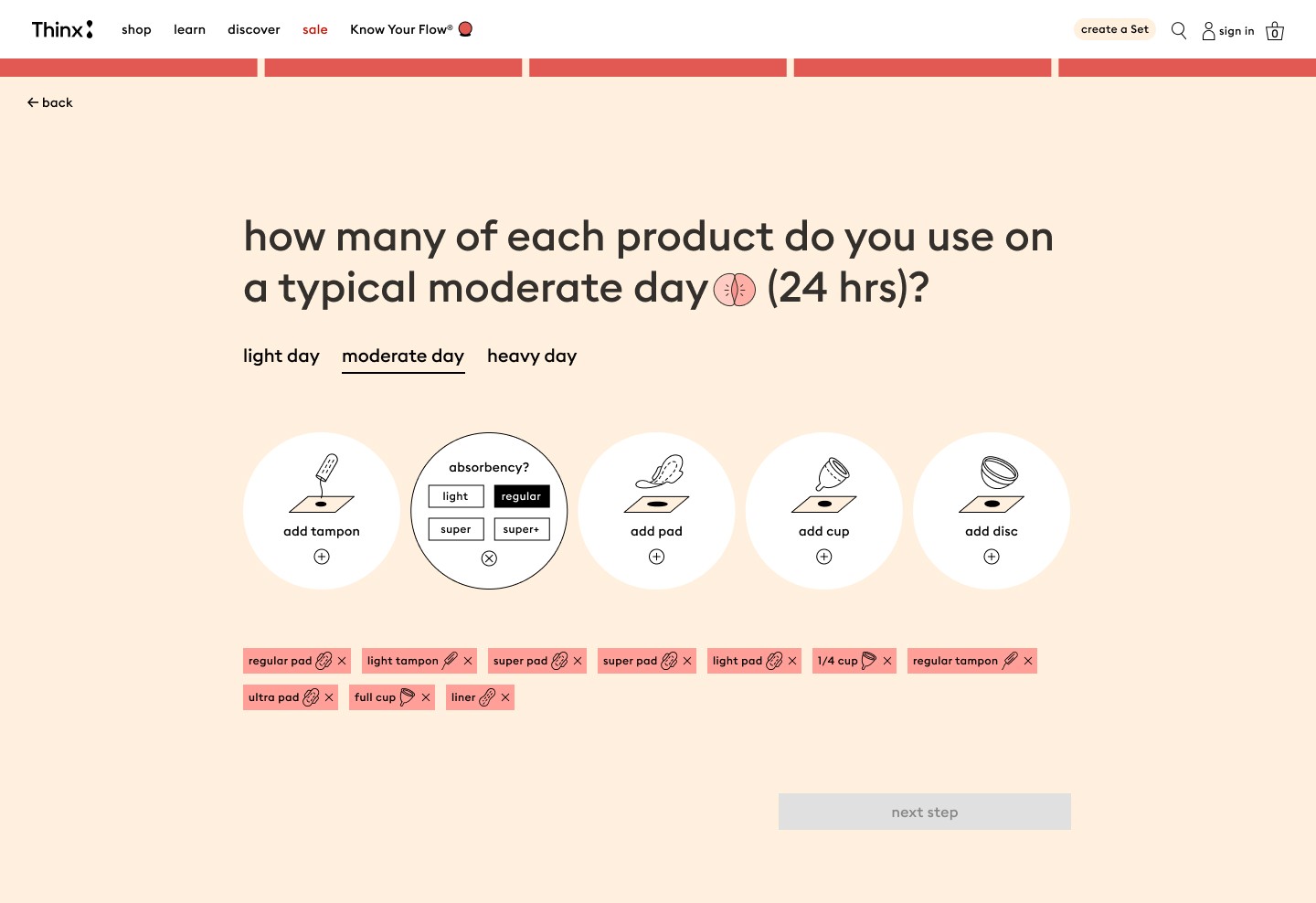
First, periods are personal and often emotionally loaded. The tone of every question, every label, every bit of copy had to be warm, non-judgmental, and body-positive. Most period products define what "light," "medium," and "heavy" flow should mean. We deliberately didn't do that. Instead the quiz asked users to define their own flow by specifying how many of their current products they use on each type of day. This avoided othering anyone and produced more accurate recommendations because the inputs were grounded in each user's actual experience.
Second, the recommendation logic was genuinely complex. The algorithm needed to calculate total fluid volume from the user's inputs, map that to the absorbency capacity of each Thinx style, and generate a recommendation that told the user not just which styles to buy but how many pairs they'd need for each type of day. Designing the results page meant making that complexity feel simple and clear rather than overwhelming.
Third, the quiz needed to work as an acquisition tool, not just an education tool. Every design decision, from question sequencing to progress indicators to the results page CTA, needed to keep users moving toward purchase without feeling like a sales funnel.
Key Design Decisions
Decision 1: User-defined flow instead of brand-defined flow.
Every other period product on the market tells users what light, medium, and heavy means. We flipped that. The quiz asks users to input their own products and quantities for each type of day. This was both more inclusive and more accurate: it met users in their existing mental model instead of asking them to adopt a new one, and it gave the algorithm real data to work with instead of a self-reported category that meant different things to different people.
Decision 2: Progress transparency throughout.
Users navigating a sensitive, personal quiz need to feel in control. We made the question count explicit at every step, letting users see exactly how far they were and how much was left. This reduced abandonment by removing the uncertainty of "how long is this going to take."
Decision 3: Recommendations framed as a routine, not a product list.
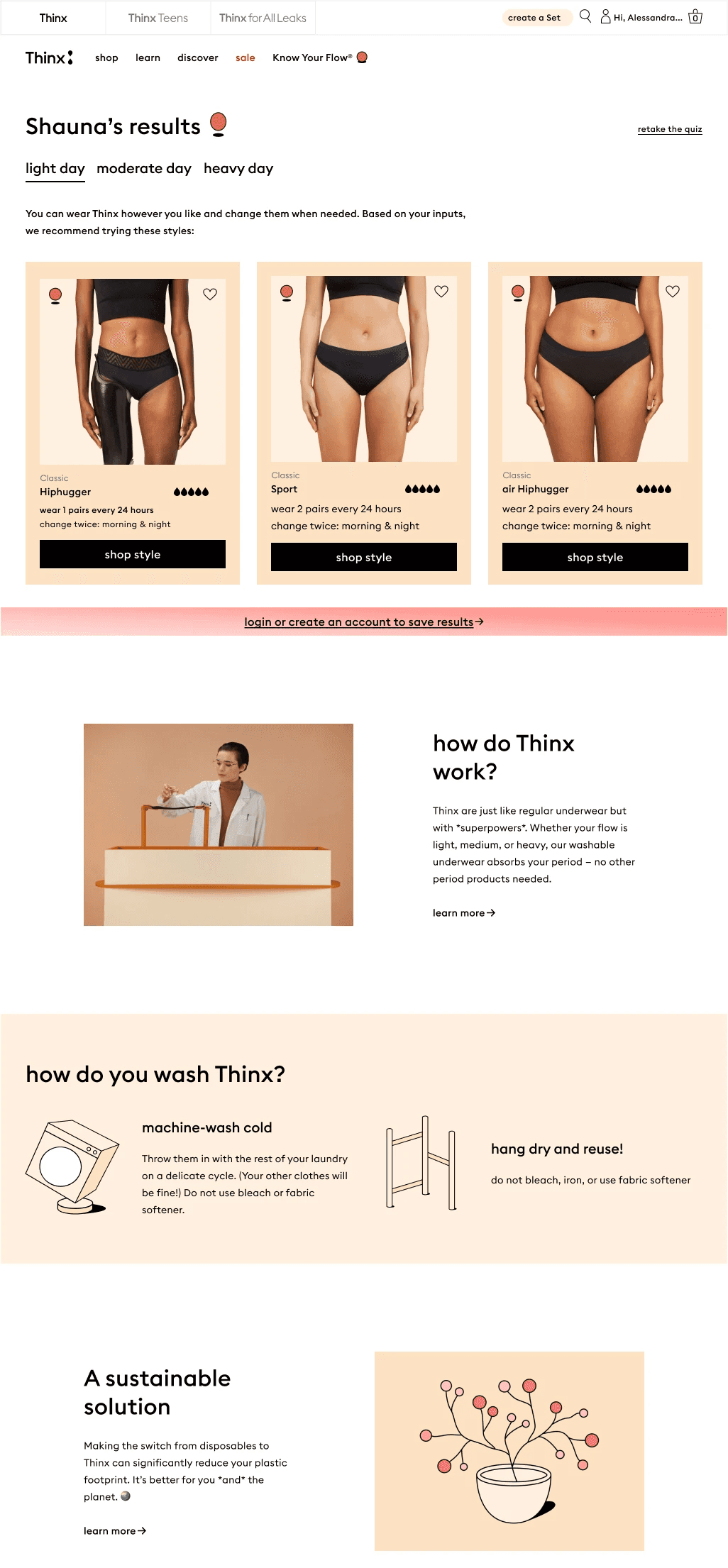
The results page didn't just say "buy these styles." It showed users how Thinx could fit into their existing period routine, recommending specific styles for light days, medium days, and heavy days, and explaining how many pairs they'd need. This framing made the purchase feel like a practical plan rather than an experiment, which was essential for converting users who had never tried period underwear before.
Designing the Recommendation System
Behind the quiz is a threshold logic system that translates personal behavior into a concrete shopping plan. Every answer rolls up to one of five absorbency thresholds: Lightest (9 mL), Light (18 mL), Moderate (27 mL), Heavy (36 mL), and Super (45 mL). Each threshold is calibrated against the absorbency capacity of every Thinx style in the catalog.
Once a user's daily fluid volume is calculated, the system ranks eligible products using three rules in order. First, it sorts by the style that needs to be changed the fewest times during a flow day, because the wearer's experience is defined by how often they manage the product, not by which one the site wants to sell. Second, it sorts by the lightest absorbency that still meets the threshold, so no one is overpaying for capacity they do not need. Third, when more than three styles still qualify, the top three best sellers are surfaced.
This produced a recommendation that felt like a routine, not a catalog. Users saw a specific set of pairs, a specific way to use them across light, medium, and heavy days, and a specific number of each style to purchase. That concreteness was the conversion lever. When the recommendation is vague, the user defers. When the recommendation is a plan, the user acts on it.
Validating the Flow
Before launch, the recommendation logic was pressure-tested against real users, not just internal assumptions. The concern was straightforward: a plan that reads well on paper can still fail the moment someone tries to match it to their actual period.
Usability sessions walked participants through the quiz end to end, then asked them to describe the recommendation in their own words. The signal we cared about was not whether they liked the quiz but whether they could repeat back what to buy, how to use it across a cycle, and why those specific styles were chosen. If the plan did not survive that retelling, it was not going to survive checkout.
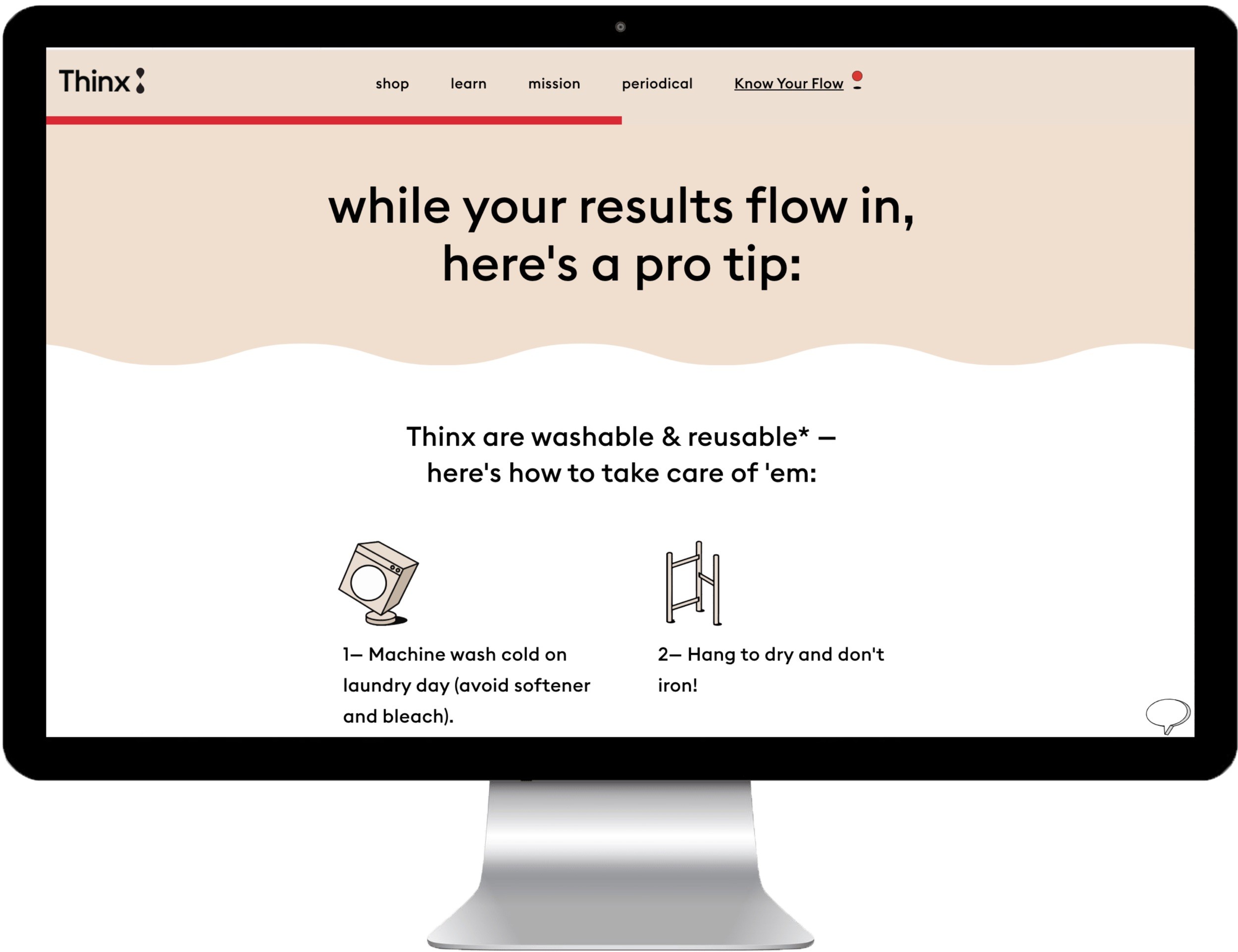
A few patterns surfaced quickly. Users trusted the recommendation more when the reasoning was visible, so we added a short rationale tying each suggested style to the answers they had just given. Users also hesitated when the suggested quantity felt arbitrary, so quantities were anchored to a recognizable unit, enough for one cycle, so the number stopped reading as a guess.
The validation phase did not change the underlying threshold logic. It changed how the logic was presented. The math had been right from the start. What needed work was the handoff between the math and the moment a first-time buyer decides to trust it.
Impact
Overall conversion rate: 8.44%
New user conversion rate: 7.67%
Desktop: 12.23%, Mobile: 6.81%, Tablet: 7.61%
Became the highest-performing acquisition tool on the site
Reflection
This project taught me that designing for behavior change is different from designing for task completion. The goal wasn't just to help users answer eight questions correctly. It was to move someone from "curious but uncertain" to "confident enough to buy." Every interaction had to serve that emotional transition, not just the functional one.
The hardest part was the results page. We went through more iterations there than anywhere else in the quiz, because it had to do three things simultaneously: explain complex recommendation logic clearly, make the user feel seen and understood, and convert them to purchase. Getting all three to coexist without any one of them overwhelming the others took a lot of rounds of testing and refinement.