Speax Redesign

Redesigning the Speax e-commerce experience to improve product clarity, reduce purchase hesitation, and increase conversion.

UX Research

UX Research

UX/UI Design

UX/UI Design

Design Systems

Design Systems

User Testing

User Testing

Platform

Responsive Web

Role

UX/UI Designer

Company

Thinx Inc.

Industry

E-commerce, Healthcare, Consumer Products

Overview

Overview

Overview

Turning a visually driven site into a decision driven experience

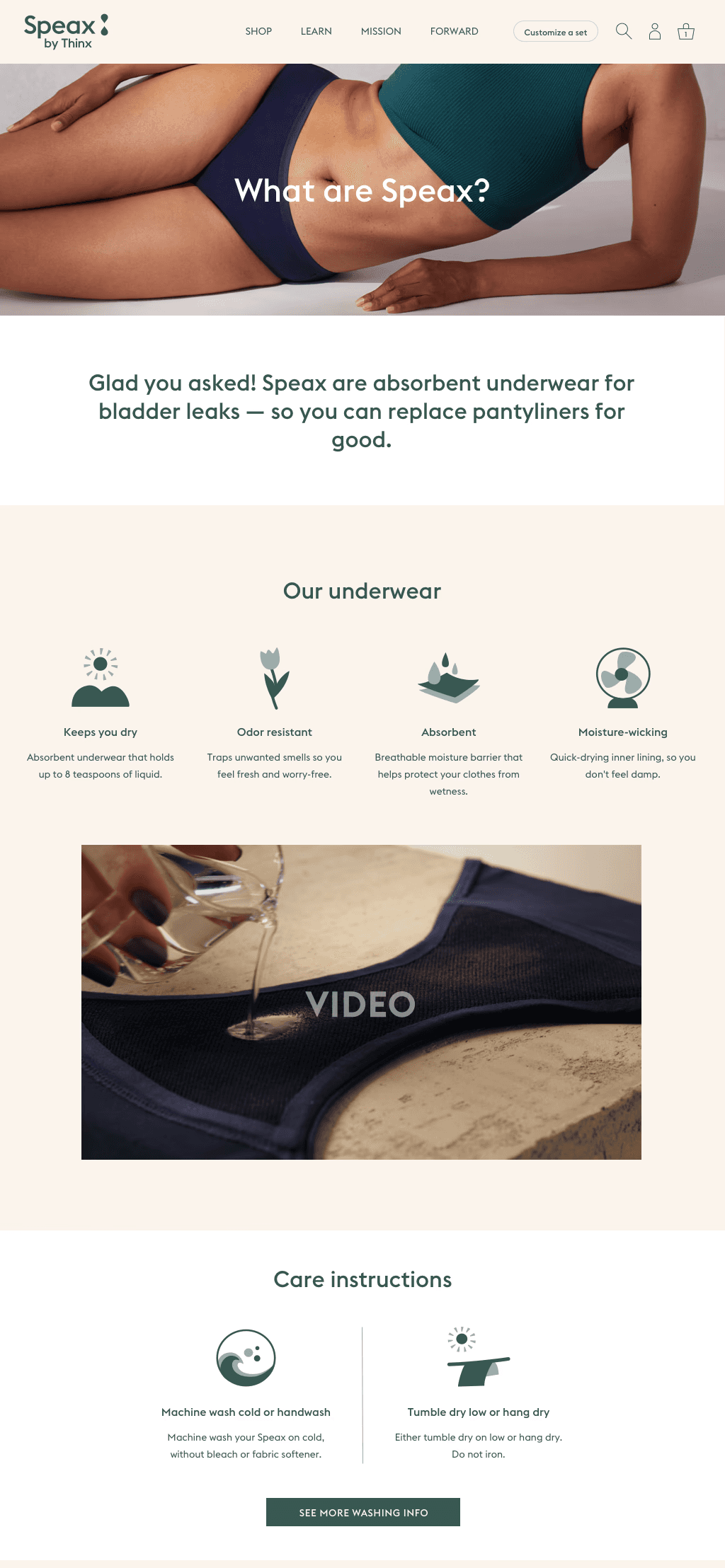
Speax is an absorbent underwear brand designed for women navigating bladder leaks, a sensitive and often unfamiliar category. The original website emphasized brand and lifestyle imagery but lacked the clarity and structure needed to help users understand the product and choose confidently.

As part of a broader redesign initiative, our team restructured the experience to prioritize product education, clearer navigation, and scalable design systems. The goal was to reduce uncertainty, support confident decision-making, and create a foundation for long-term product and brand growth.

Key outcomes:
• Conversion increased to 4.32% a 105.7% uplift
• Revenue increased by over one million dollars within two months
• Cross brand engagement and product discovery significantly improved

Turning a visually driven site into a decision driven experience

Speax is an absorbent underwear brand designed for women navigating bladder leaks, a sensitive and often unfamiliar category. The original website emphasized brand and lifestyle imagery but lacked the clarity and structure needed to help users understand the product and choose confidently.

As part of a broader redesign initiative, our team restructured the experience to prioritize product education, clearer navigation, and scalable design systems. The goal was to reduce uncertainty, support confident decision-making, and create a foundation for long-term product and brand growth.

Key outcomes:
• Conversion increased to 4.32% a 105.7% uplift
• Revenue increased by over one million dollars within two months
• Cross brand engagement and product discovery significantly improved

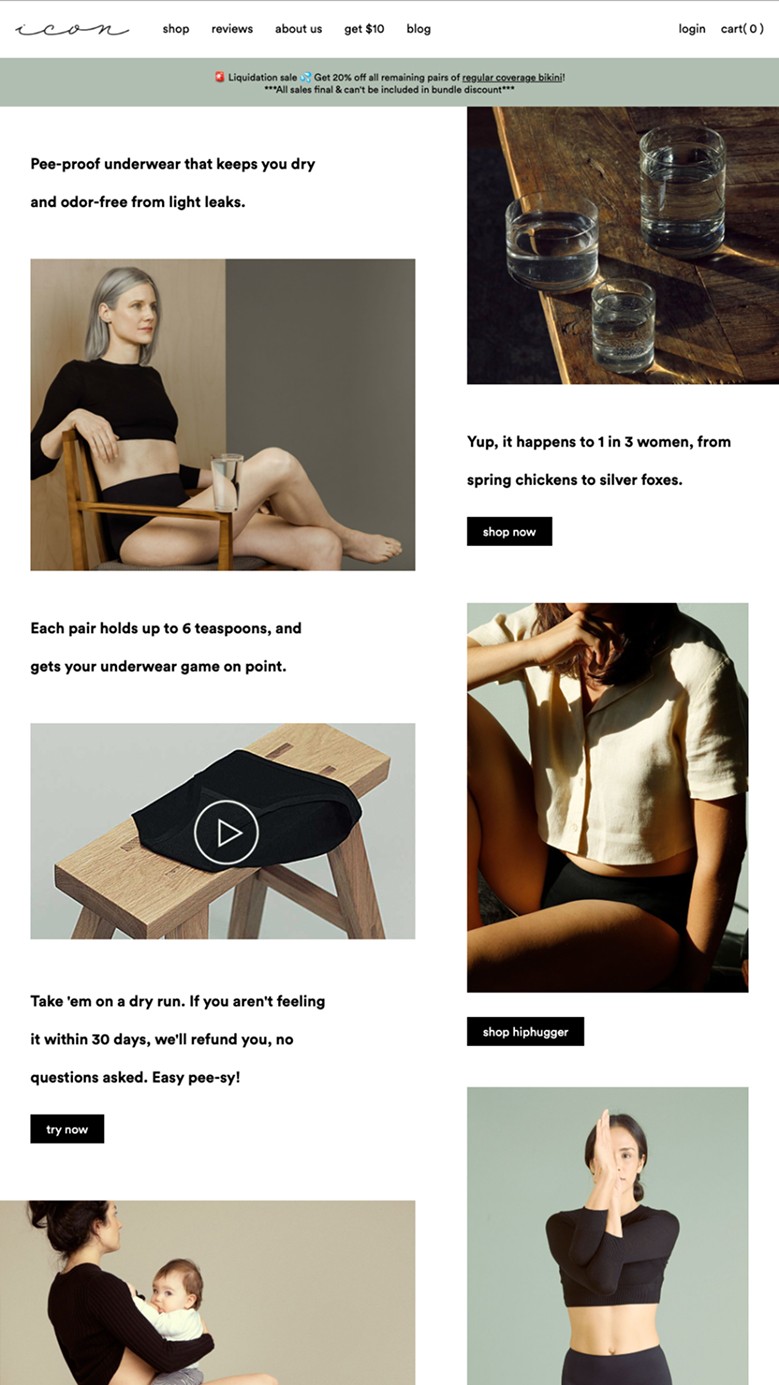
BEFORE (Icon Homepage)

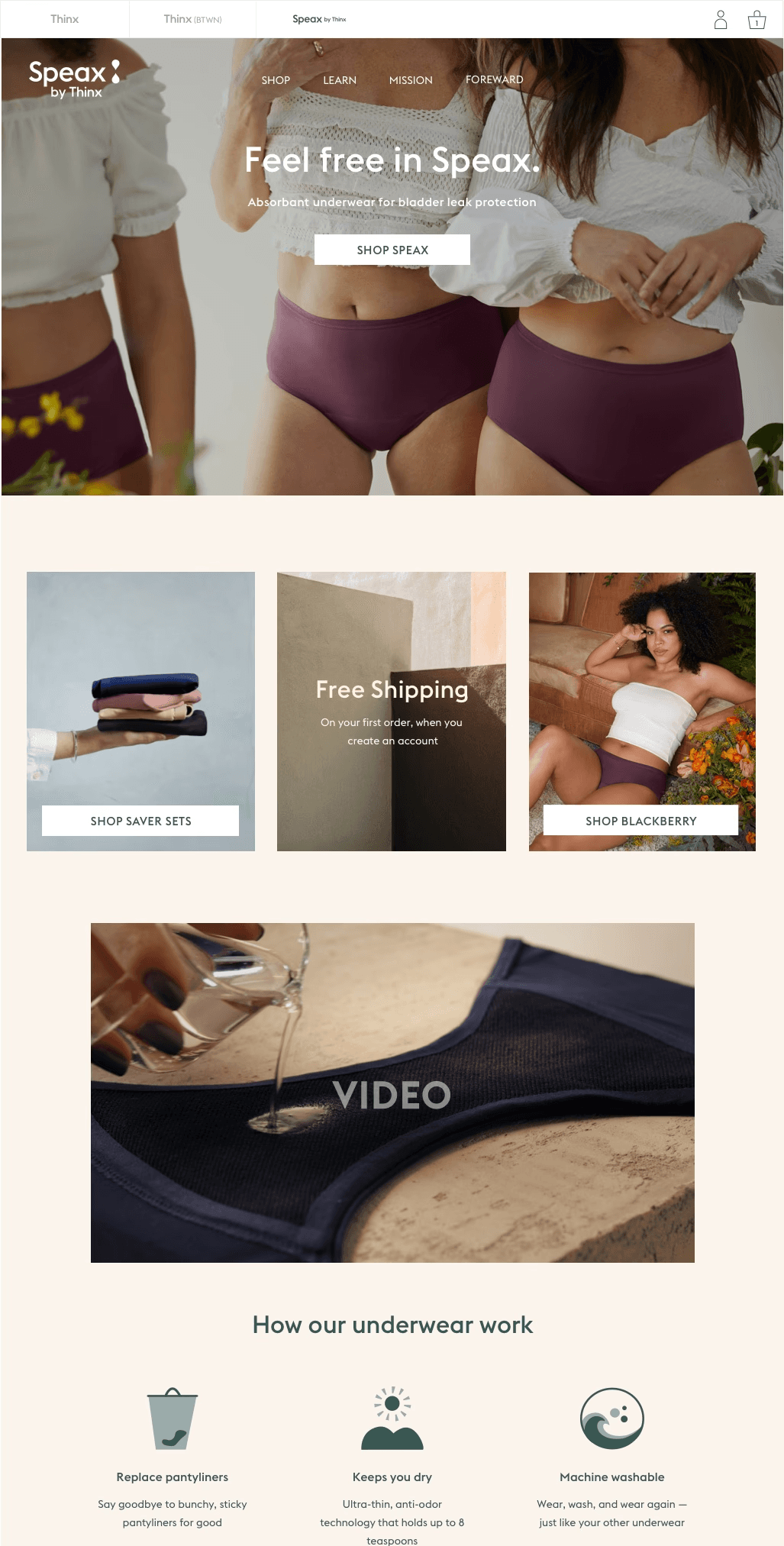
AFTER (Speax Homepage)
Project Impact

Project Impact

Project Impact

A clearer, more usable e-commerce experience, designed to reduce friction

The final Speax experience prioritized visible choices, easier comparison across products, and clearer selection patterns on PDPs. The redesign removed high-error interactions (prefilled defaults, dropdown reliance), improved browsing orientation, and reinforced decision-support content at the right moments, resulting in an experience that was both easier to use and more conversion-ready.

Speax conversion rate: 4.32% (+105.7% uplift)

Tri-Brand Navigation encouraged traffic between brands and cross-brand shopping:
• Speax site drives 11.99% traffic to Thinx, 3.47% to Thinx(BTWN)
• Thinx(BTWN) site drives 25.37% traffic to Thinx, 7.94% to Speax
• Thinx site drives 3.45% traffic to Speax, 3.80% to Thinx(BTWN)

2 months post-launch: Revenue increased across all 3 brands:
• Speax: +15.9%
• Thinx: +14.7%
• Thinx(BTWN): +27.1%

2 months post-launch: Total revenue increase: +$1,024,950.00

A clearer, more usable e-commerce experience, designed to reduce friction

The final Speax experience prioritized visible choices, easier comparison across products, and clearer selection patterns on PDPs. The redesign removed high-error interactions (prefilled defaults, dropdown reliance), improved browsing orientation, and reinforced decision-support content at the right moments, resulting in an experience that was both easier to use and more conversion-ready.

Speax conversion rate: 4.32% (+105.7% uplift)

Tri-Brand Navigation encouraged traffic between brands and cross-brand shopping:
• Speax site drives 11.99% traffic to Thinx, 3.47% to Thinx(BTWN)
• Thinx(BTWN) site drives 25.37% traffic to Thinx, 7.94% to Speax
• Thinx site drives 3.45% traffic to Speax, 3.80% to Thinx(BTWN)

2 months post-launch: Revenue increased across all 3 brands:
• Speax: +15.9%
• Thinx: +14.7%
• Thinx(BTWN): +27.1%

2 months post-launch: Total revenue increase: +$1,024,950.00

The Problem

The Problem

The Problem

Users lacked the clarity and guidance needed to confidently choose a product

The original Icon website did not clearly help users understand how the product worked, how styles differed, or which option was right for their needs. Because absorbent underwear was unfamiliar to many customers, the experience required stronger product education and clearer decision support.

Prior user feedback, usability testing, and survey responses revealed several key issues:
• Users struggled to understand absorbency levels and product differences
• Important product details were difficult to find or inconsistently presented
• Navigation and page structure did not align with how users evaluated products
• Educational content existed but was not integrated into the decision-making flow.

Users lacked the clarity and guidance needed to confidently choose a product

The original Icon website did not clearly help users understand how the product worked, how styles differed, or which option was right for their needs. Because absorbent underwear was unfamiliar to many customers, the experience required stronger product education and clearer decision support.

Prior user feedback, usability testing, and survey responses revealed several key issues:
• Users struggled to understand absorbency levels and product differences
• Important product details were difficult to find or inconsistently presented
• Navigation and page structure did not align with how users evaluated products
• Educational content existed but was not integrated into the decision-making flow.

Previously noted issues with the Icon website

Research

Research

Research

Research and behavioral data revealed where users struggled to understand an choose products

We conducted extensive research to understand how users evaluated absorbent underwear, what information they needed to make decisions, and where the existing experience was breaking down.

This work included:
• IA testing (tree tests and card sorts) to evaluate site structure and labeling
• Moderated usability testing on product pages and purchase flows
• Surveys and analytics analysis to identify friction points and drop-off
• Persona and journey workshops to synthesize behavioral patterns
• Focus groups in Dallas, Kansas City, New York City, and Los Angeles to evaluate early Speax concepts and messaging

Research revealed that users struggled to understand absorbency differences, compare products, and evaluate whether the product would meet their needs.

User Personas

Usability testing methodology

Final information architecture resulting from testing

Insights

Insights

Insights

Insights

High product cost and emotional sensitivity made trust and risk reduction essential to conversion

Research revealed that the primary barrier to purchase was not visual design, but perceived risk. Speax products were significantly more expensive than traditional underwear, and users needed to feel confident that the product would work for their specific needs before committing to purchase.

Because incontinence is a sensitive and stigmatized experience, users approached the decision cautiously. Participants expressed concern about choosing the wrong product, wasting money, or experiencing leaks. Without the ability to physically examine the product, users relied entirely on the website to provide reassurance, clarity, and justification for the price.

Key insight 1: Users needed reassurance before committing
Users were hesitant to purchase without clear information about absorbency, fit, and return options.

Key insight 2: Product differentiation needed to be clear since the category was brand new
Users struggled to understand differences between styles and identify the right product.

Key insight 3: Product education was essential to justify price
Users needed stronger explanation of product value to feel confident purchasing.

Audience Insight from Qual Research and Learnings Presentation

Strategy

Strategy

Strategy

Strategy

The redesign focused on reducing risk, improving clarity, and strengthening trust across the product ecosystem

Based on research findings, the redesign focused on improving clarity, trust, and decision support throughout the experience. Rather than prioritizing visual changes alone, we focused on restructuring the experience to help users understand products, evaluate their options, and feel confident in their purchase.

The redesign focused on four strategic priorities:
• Improve product education and clarity
• Reduce friction during product selection
• Support confident decision making
• Strengthen brand trust and credibility

The redesign focused on reducing risk, improving clarity, and strengthening trust across the product ecosystem

Based on research findings, the redesign focused on improving clarity, trust, and decision support throughout the experience. Rather than prioritizing visual changes alone, we focused on restructuring the experience to help users understand products, evaluate their options, and feel confident in their purchase.

The redesign focused on four strategic priorities:
• Improve product education and clarity
• Reduce friction during product selection
• Support confident decision making
• Strengthen brand trust and credibility

Speax Shop Navigation Wireframe for Desktop

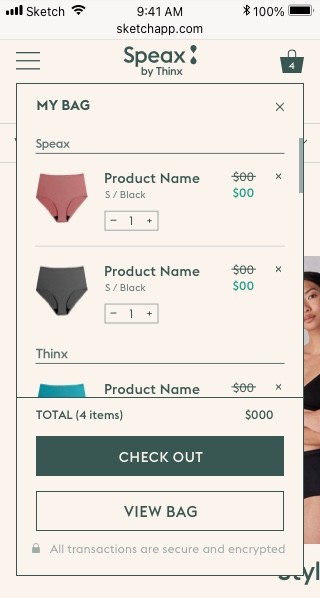
Speax Shop Navigation Wireframe for Mobile

Design & Iteration

Design & Iteration

Design & Iteration

Design & Iteration

Designing a full e-commerce ecosystem across 30+ pages and flows

The Speax redesign was executed as a structured, sprint-based effort spanning more than 30 individual pages, components, and supporting flows. Rather than redesigning isolated screens, we approached the work as a cohesive commerce system, ensuring consistency and clarity across every stage of the customer journey.

Core commerce experiences included:
• Homepage
• Collections pages
• Product detail pages
• Cart and checkout flows
• Account management
• FAQs
• Educational content
• Bundle builders
• Marketing landing pages
• Tri-brand navigation
• Referral flows
• Post-purchase experiences
• + more

Each page was designed, reviewed, and refined through collaborative sprint cycles involving product, engineering, marketing, and leadership stakeholders. Regular design reviews ensured the experience addressed user needs while aligning with business priorities, technical constraints, and brand strategy.

As work progressed, patterns and components were standardized into a scalable design system. This allowed improvements made in one area to be applied consistently across the platform, accelerating development and creating a predictable, trustworthy experience for users.

This structured, systems-driven approach ensured the final experience was not only visually cohesive, but operationally scalable and optimized for long-term growth.

Designing a full e-commerce ecosystem across 30+ pages and flows

The Speax redesign was executed as a structured, sprint-based effort spanning more than 30 individual pages, components, and supporting flows. Rather than redesigning isolated screens, we approached the work as a cohesive commerce system, ensuring consistency and clarity across every stage of the customer journey.

Core commerce experiences included:
• Homepage
• Collections pages
• Product detail pages
• Cart and checkout flows
• Account management
• FAQs
• Educational content
• Bundle builders
• Marketing landing pages
• Tri-brand navigation
• Referral flows
• Post-purchase experiences
• + more

Each page was designed, reviewed, and refined through collaborative sprint cycles involving product, engineering, marketing, and leadership stakeholders. Regular design reviews ensured the experience addressed user needs while aligning with business priorities, technical constraints, and brand strategy.

As work progressed, patterns and components were standardized into a scalable design system. This allowed improvements made in one area to be applied consistently across the platform, accelerating development and creating a predictable, trustworthy experience for users.

This structured, systems-driven approach ensured the final experience was not only visually cohesive, but operationally scalable and optimized for long-term growth.

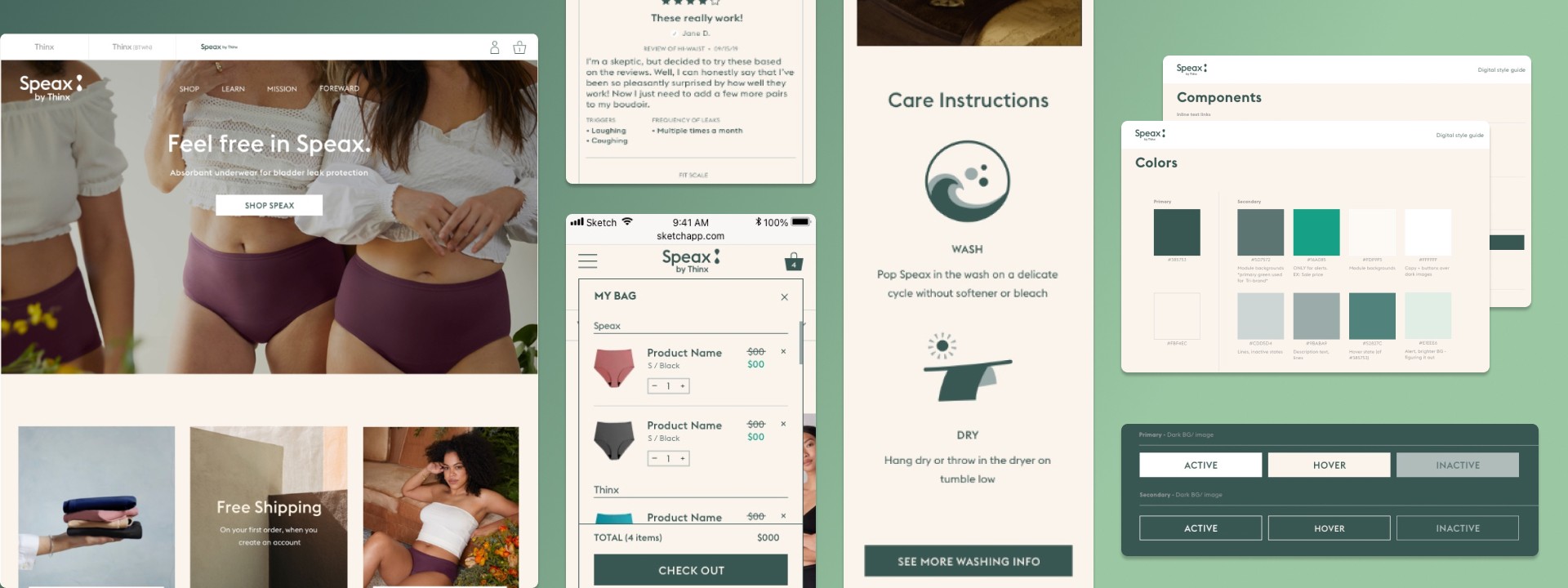
Screen from Speax UI Kit

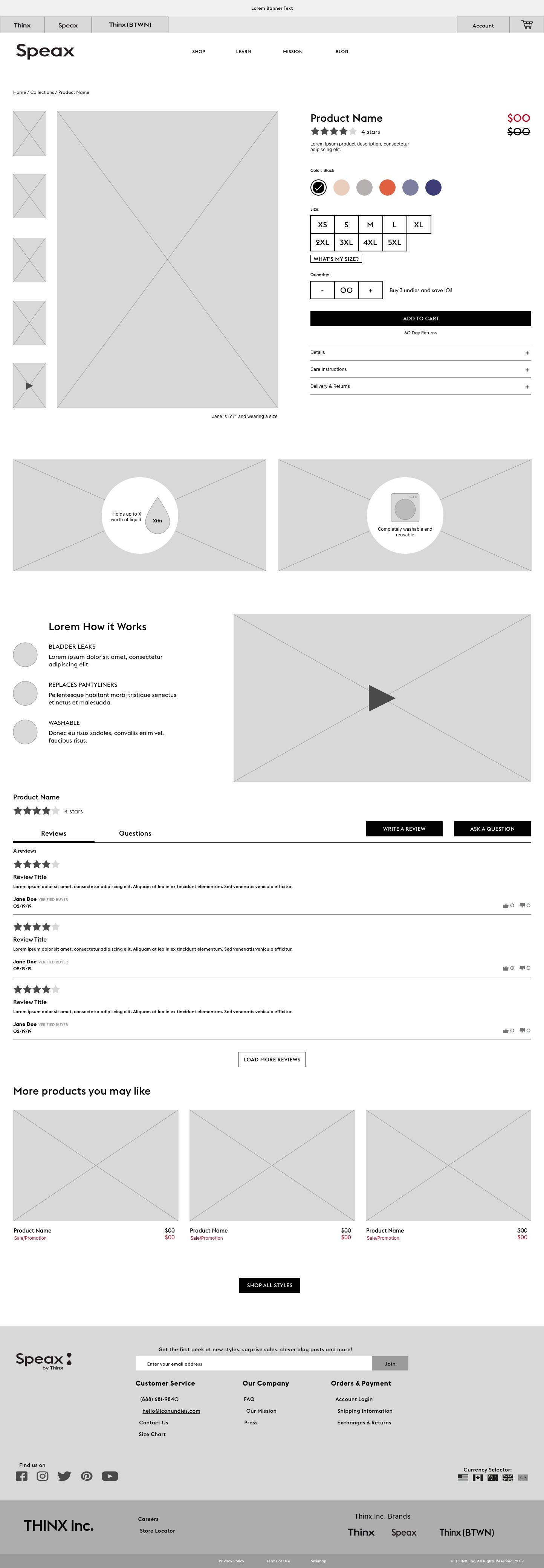
Speax PDP Wireframes on Desktop

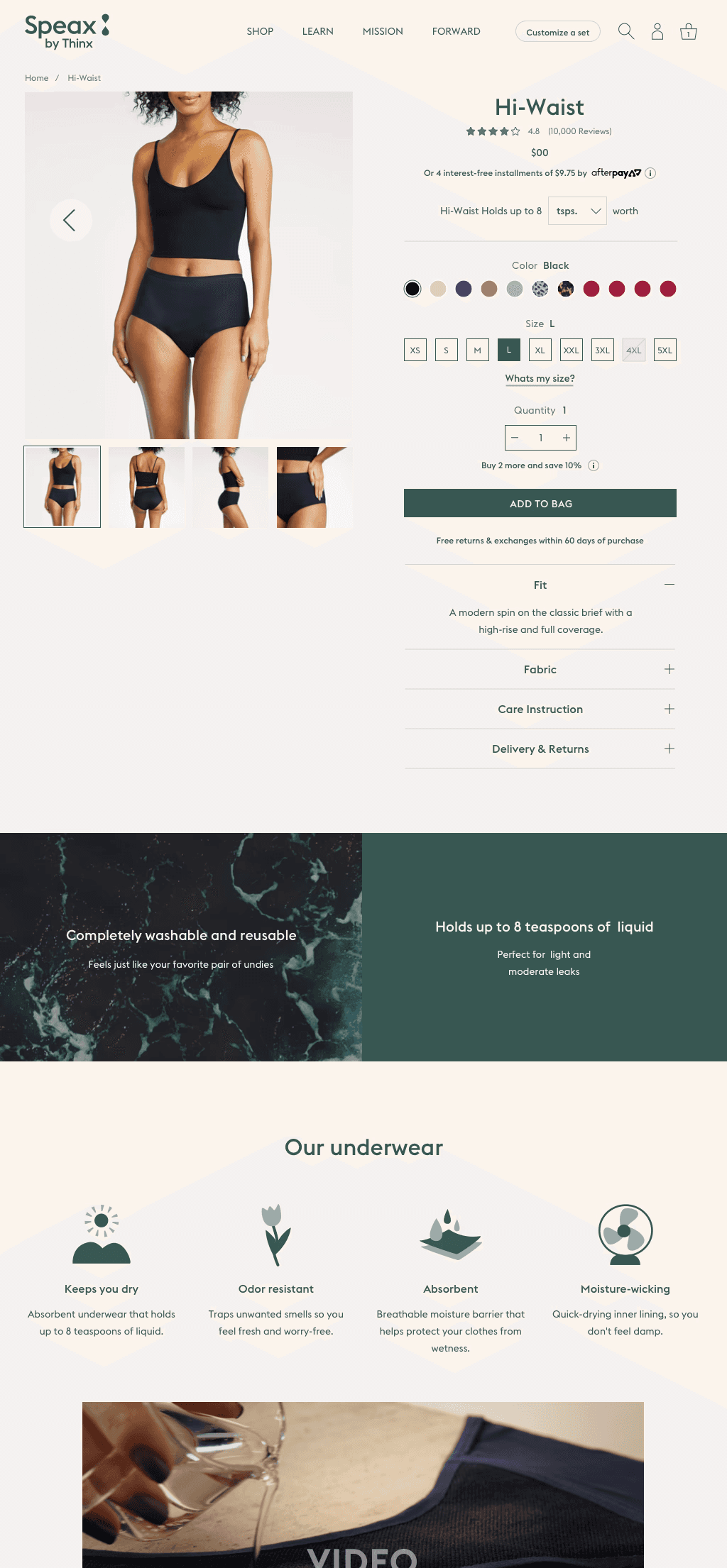
Speax PDP Final Design on Desktop

Final Design

Final Design

Final Design

Final Design

The final experience clarified product differences, reduced perceived risk, and enabled confident purchase decisions

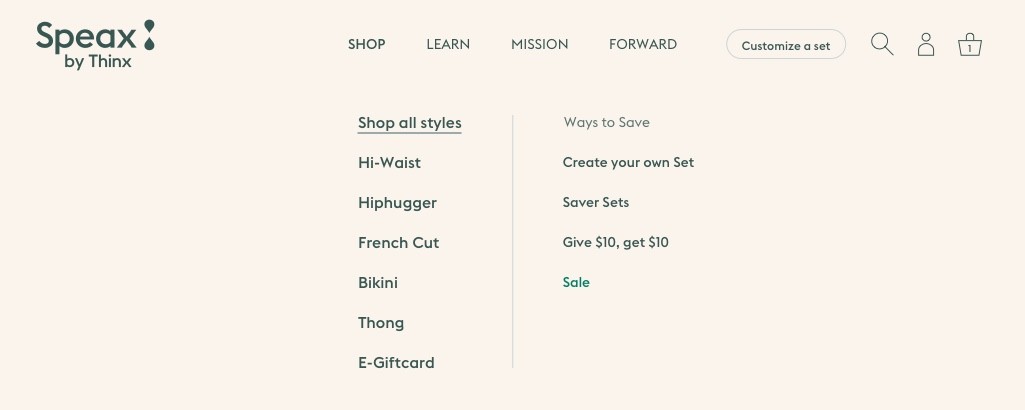
The final Speax experience was designed to help users understand products quickly, evaluate their options confidently, and feel reassured in their purchase. Navigation was simplified and reorganized to reflect user mental models, making it easier to move between product categories, educational content, and brand information.

Product pages were redesigned to clearly communicate absorbency levels, intended use cases, and product differences. Educational content was integrated directly into the shopping experience, helping users understand how the products worked and which option was right for their needs. Reassurance elements such as guarantees and return information were surfaced more clearly, helping reduce perceived risk associated with the purchase.

The tri brand navigation provided additional context by connecting Speax with its sister brands, reinforcing credibility and helping users understand the broader product ecosystem. This strengthened trust and helped position Speax as part of a cohesive, supportive brand experience.

The final design shifted the experience from a visually driven website to a structured, educational system that guided users toward confident, informed purchase decisions.

The final experience clarified product differences, reduced perceived risk, and enabled confident purchase decisions

The final Speax experience was designed to help users understand products quickly, evaluate their options confidently, and feel reassured in their purchase. Navigation was simplified and reorganized to reflect user mental models, making it easier to move between product categories, educational content, and brand information.

Product pages were redesigned to clearly communicate absorbency levels, intended use cases, and product differences. Educational content was integrated directly into the shopping experience, helping users understand how the products worked and which option was right for their needs. Reassurance elements such as guarantees and return information were surfaced more clearly, helping reduce perceived risk associated with the purchase.

The tri brand navigation provided additional context by connecting Speax with its sister brands, reinforcing credibility and helping users understand the broader product ecosystem. This strengthened trust and helped position Speax as part of a cohesive, supportive brand experience.

The final design shifted the experience from a visually driven website to a structured, educational system that guided users toward confident, informed purchase decisions.

Speax PDP Wireframes and Final Design

Speax Homepage on Desktop

Speax PDP Wireframes and Final Design

Speax Collections Page on Desktop

Speax PDP Wireframes and Final Design

Speax PDP on Desktop

Speax PDP Wireframes and Final Design

Speax How it Works Page on Desktop

Impact

Impact

Impact

Impact

Improving clarity and trust led to measurable gains in conversion, revenue, and cross brand engagement

Following the launch of the redesigned Speax experience, the brand saw significant improvements in both user behavior and business performance. Conversion rate increased to 4.32%, representing a 105.7% uplift compared to the previous experience. These gains reflected the effectiveness of improving product clarity, reducing perceived risk, and supporting confident purchase decisions.

The redesign also strengthened engagement across the broader brand ecosystem. Speax drove meaningful traffic to its sister brands, while also benefiting from cross brand discovery. This demonstrated that clearer brand education and unified navigation helped users better understand the full product offering and engage more deeply with the brand.

Within the first two months post launch, the redesign contributed to substantial revenue growth across all brands, with a combined increase of over one million dollars. These results validated that improving clarity, trust, and decision support not only improved the user experience, but also delivered meaningful business impact.

Improving clarity and trust led to measurable gains in conversion, revenue, and cross brand engagement

Following the launch of the redesigned Speax experience, the brand saw significant improvements in both user behavior and business performance. Conversion rate increased to 4.32%, representing a 105.7% uplift compared to the previous experience. These gains reflected the effectiveness of improving product clarity, reducing perceived risk, and supporting confident purchase decisions.

The redesign also strengthened engagement across the broader brand ecosystem. Speax drove meaningful traffic to its sister brands, while also benefiting from cross brand discovery. This demonstrated that clearer brand education and unified navigation helped users better understand the full product offering and engage more deeply with the brand.

Within the first two months post launch, the redesign contributed to substantial revenue growth across all brands, with a combined increase of over one million dollars. These results validated that improving clarity, trust, and decision support not only improved the user experience, but also delivered meaningful business impact.

Reflection

Reflection

Reflection

Reflection

This project reinforced that clarity and trust are essential when users are making sensitive, high risk decisions

This project deepened my understanding of how emotional sensitivity and perceived risk shape user behavior. Designing for Speax was not simply about improving usability, it was about helping users feel understood, supported, and confident when navigating a deeply personal decision.

Research showed that even when products were well designed, users could not move forward without sufficient clarity and reassurance. This reinforced the importance of designing experiences that reduce uncertainty, clearly communicate value, and support confident decision making, especially when users cannot physically interact with a product.

This work reinforced the importance of grounding design decisions in observed user behavior rather than assumptions, ensuring improvements addressed real barriers to conversion. Iterative testing and direct user feedback ensured that improvements addressed real barriers rather than surface level issues.

Ultimately, this project strengthened my ability to translate complex research findings into clear, actionable design decisions that improve both user experience and business outcomes.

This project reinforced that clarity and trust are essential when users are making sensitive, high risk decisions

This project deepened my understanding of how emotional sensitivity and perceived risk shape user behavior. Designing for Speax was not simply about improving usability, it was about helping users feel understood, supported, and confident when navigating a deeply personal decision.

Research showed that even when products were well designed, users could not move forward without sufficient clarity and reassurance. This reinforced the importance of designing experiences that reduce uncertainty, clearly communicate value, and support confident decision making, especially when users cannot physically interact with a product.

This work reinforced the importance of grounding design decisions in observed user behavior rather than assumptions, ensuring improvements addressed real barriers to conversion. Iterative testing and direct user feedback ensured that improvements addressed real barriers rather than surface level issues.

Ultimately, this project strengthened my ability to translate complex research findings into clear, actionable design decisions that improve both user experience and business outcomes.

Copyright © 2026 by Michelle Flacks

Copyright © 2026 by Michelle Flacks

Copyright © 2026 by Michelle Flacks

Copyright © 2026 by Michelle Flacks